BPC-157 is a synthetic 15-amino-acid peptide studied since the early 1990s. Animal research suggests accelerated repair of tendon, ligament, muscle and gastrointestinal tissue, earning it the nickname “the Wolverine peptide” in research culture.
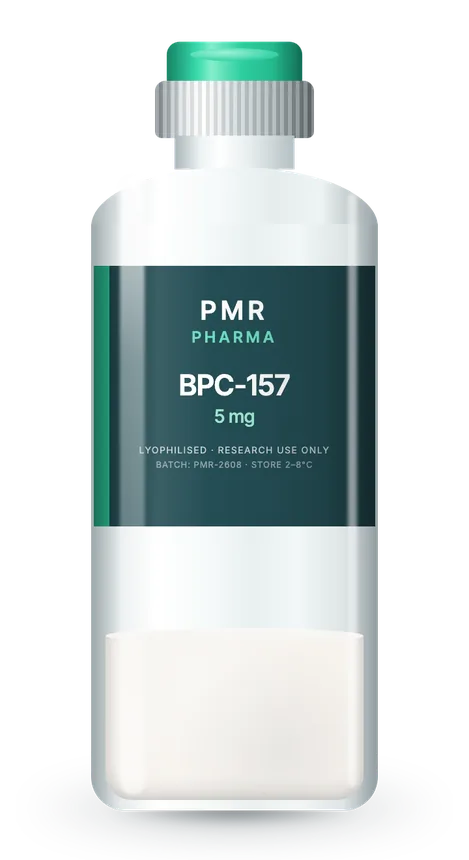
BPC-157 (Body Protection Compound-157) is derived from a protective protein found in human gastric juice, developed by researchers in Zagreb, Croatia. Unusually for a peptide, it is stable in stomach acid.
Preclinical work points to promotion of angiogenesis via the VEGF pathway, modulation of nitric-oxide signalling, and upregulation of growth-hormone receptors on fibroblasts — the pathways behind blood-vessel formation and tissue remodelling at injury sites.
The evidence base is overwhelmingly preclinical: hundreds of animal studies, but only a handful of small human pilot studies to date. It is not an approved medicine anywhere and is WADA-prohibited for athletes.
Findings from the published literature, with the evidence level stated honestly for every claim.
Studied continuously since the early 1990s across tendon, ligament, muscle, bone and gastrointestinal injury models.
AnimalAnimal studies suggest BPC-157 promotes new blood-vessel formation and fibroblast migration at injury sites.
Animal · in-vitroA short pentadecapeptide that is unusually stable in gastric acid — one reason it became the most-discussed recovery peptide.
Chemistry| Compound | BPC-157 (pentadecapeptide) |
|---|---|
| CAS number | 137525-51-0 |
| Molecular weight | ~1,419 Da |
| Content | 5 mg — lyophilised vial |
| Purity | ≥99% (HPLC) — batch COA supplied |
| Form | Lyophilised powder |
| Storage | 2–8 °C lyophilised; reconstituted 2–8 °C |
Store lyophilised in a cool, dark, dry place — refrigerated at 2–8 °C, or −20 °C for long-term. After reconstitution with bacteriostatic water, refrigerate at 2–8 °C.
Animal studies suggest accelerated healing of tendon, ligament, muscle and gastrointestinal tissue. Human data is minimal — only a handful of small pilot studies exist — which is why BPC-157 remains a research compound.
The nickname comes from fitness research culture, referencing its reputation in animal healing studies. It is a cultural label, not a clinical claim.
Yes — independent third-party HPLC purity and mass-spectrometry identity testing, with the batch number matched to the vial. COAs available on request.
No. It is not an approved medicine in any country, and it is on the WADA prohibited list for athletes.
Message us on WhatsApp for availability, batch COAs and dispatch. A real person replies — usually within the hour.
Enquire via WhatsApp