GHK-Cu is a naturally occurring human tripeptide bound to copper, discovered in 1973. It is one of the few research peptides that crossed into mainstream skincare, with decades of studies on collagen synthesis, skin remodelling and wound repair.
GHK-Cu (copper tripeptide-1) is present in human plasma, saliva and urine — and its levels decline substantially with age, which is the basis of research interest in it as a regenerative signal.
It works as a copper delivery vehicle: the peptide carries copper ions into cells, where they act as cofactors for enzymes like lysyl oxidase (which cross-links collagen and elastin) and superoxide dismutase (a key antioxidant enzyme). Studies suggest it stimulates fibroblasts to produce collagen, elastin and glycosaminoglycans — the structural matrix of skin.
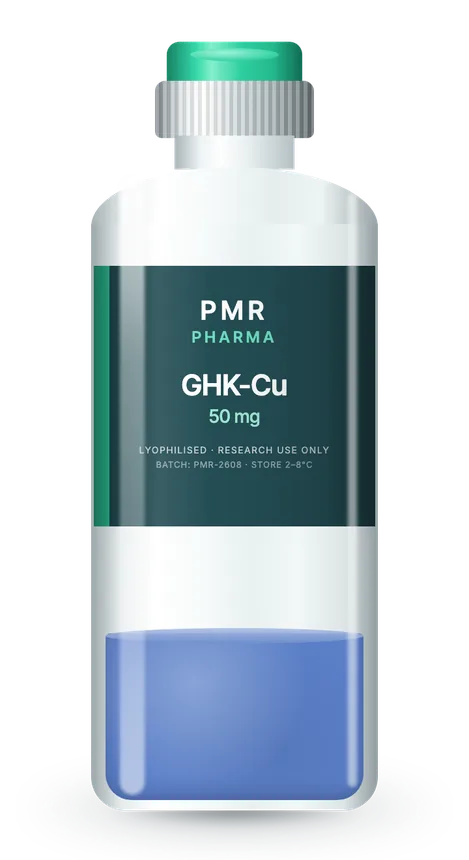
GHK-Cu has the strongest cosmetic-peptide evidence base in the catalogue for topical research, including small human trials on photoaged skin. The vial contents are naturally deep blue — the genuine colour of the copper complex.
Findings from the published literature, with the evidence level stated honestly for every claim.
Isolated by Loren Pickart from human plasma while investigating why young serum rejuvenated aged tissue.
HistoryCarries copper into cells as a cofactor for collagen cross-linking and antioxidant enzymes.
MechanismSmall enough to appear in mainstream skincare INCI lists as copper tripeptide-1 — a rare research-to-retail crossover.
In-vitro · human topical| Compound | GHK-Cu (copper tripeptide-1) |
|---|---|
| CAS number | 89030-95-5 (copper complex) |
| Molecular weight | ~403.9 Da |
| Content | 50 mg — lyophilised vial |
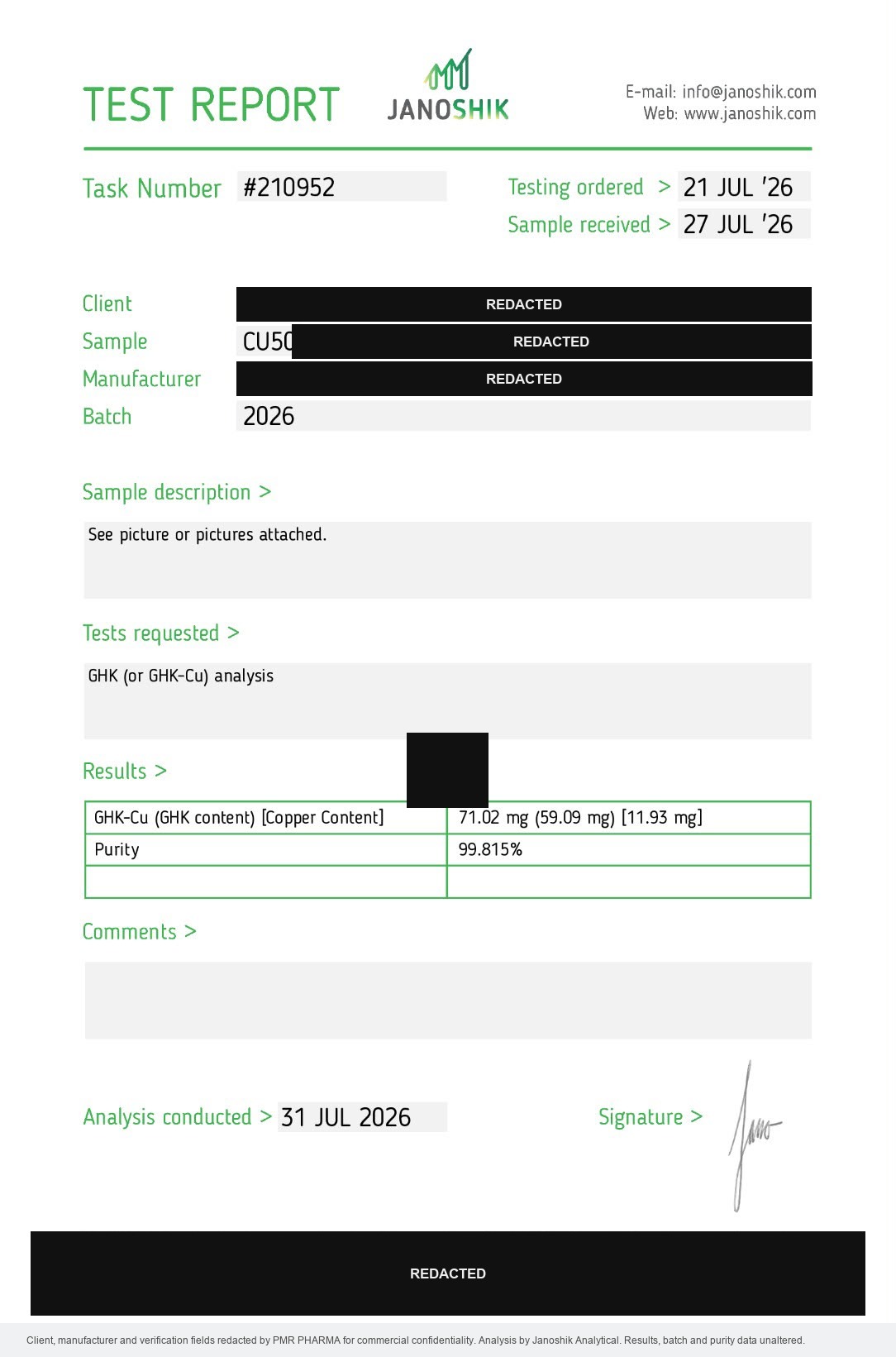
| Purity | ≥99% (HPLC) — batch COA supplied |
| Form | Lyophilised powder, naturally blue |
| Storage | 2–8 °C, protected from light |
Store lyophilised at 2–8 °C (or −20 °C long-term), protected from light. Reconstituted solution should be refrigerated and used within the research window. The deep blue colour is the natural signature of the intact copper complex — fading suggests degradation.
The colour is the genuine optical signature of the peptide-copper complex — no dye involved. Strong blue = intact complex.
In-vitro studies suggest increased collagen, elastin and glycosaminoglycan production by fibroblasts; animal studies suggest improved wound repair; small human trials of topical GHK-Cu suggest improvements in photoaged skin.
Chemically yes — copper tripeptide-1 appears in mainstream cosmetics. This vial is a pure research-grade lyophilised form, supplied for laboratory use only.
Independent third-party HPLC purity and MS identity testing on every batch, matched to the vial's batch number.
Message us on WhatsApp for availability, batch COAs and dispatch. A real person replies — usually within the hour.
Enquire via WhatsApp