MOTS-c is one of the very few peptides encoded in mitochondrial DNA rather than the cell nucleus. It rises with exercise and declines with age, and animal research describes it as mimicking part of exercise's molecular signature.
MOTS-c is a 16-amino-acid peptide encoded inside the mitochondrial genome — literally a hormone produced by the cell's power plants. Circulating levels increase with exercise and decline with age.
It activates AMPK, the cell's master energy sensor, promoting glucose uptake and fatty-acid oxidation in skeletal muscle. Under metabolic stress it can travel to the nucleus and regulate gene expression — a mitochondria-to-nucleus signalling role that has made it a focus of metabolism and ageing research.
In animal studies, MOTS-c prevented diet-induced obesity and insulin resistance, and restored exercise capacity in aged mice. Human data is observational only — levels correlate with training and muscle strength — with no completed human dosing trials.
Findings from the published literature, with the evidence level stated honestly for every claim.
One of very few peptides encoded in mitochondrial DNA — a genuine mitochondria-derived signalling molecule.
ChemistryActivates the cell's master metabolic switch, promoting glucose uptake and fat oxidation in muscle.
Mechanism · animalNature Communications: MOTS-c treatment restored running capacity in aged mice.
Animal| Compound | MOTS-c (mitochondrial-derived peptide) |
|---|---|
| CAS number | 1627580-64-6 |
| Molecular weight | ~2,174.6 Da |
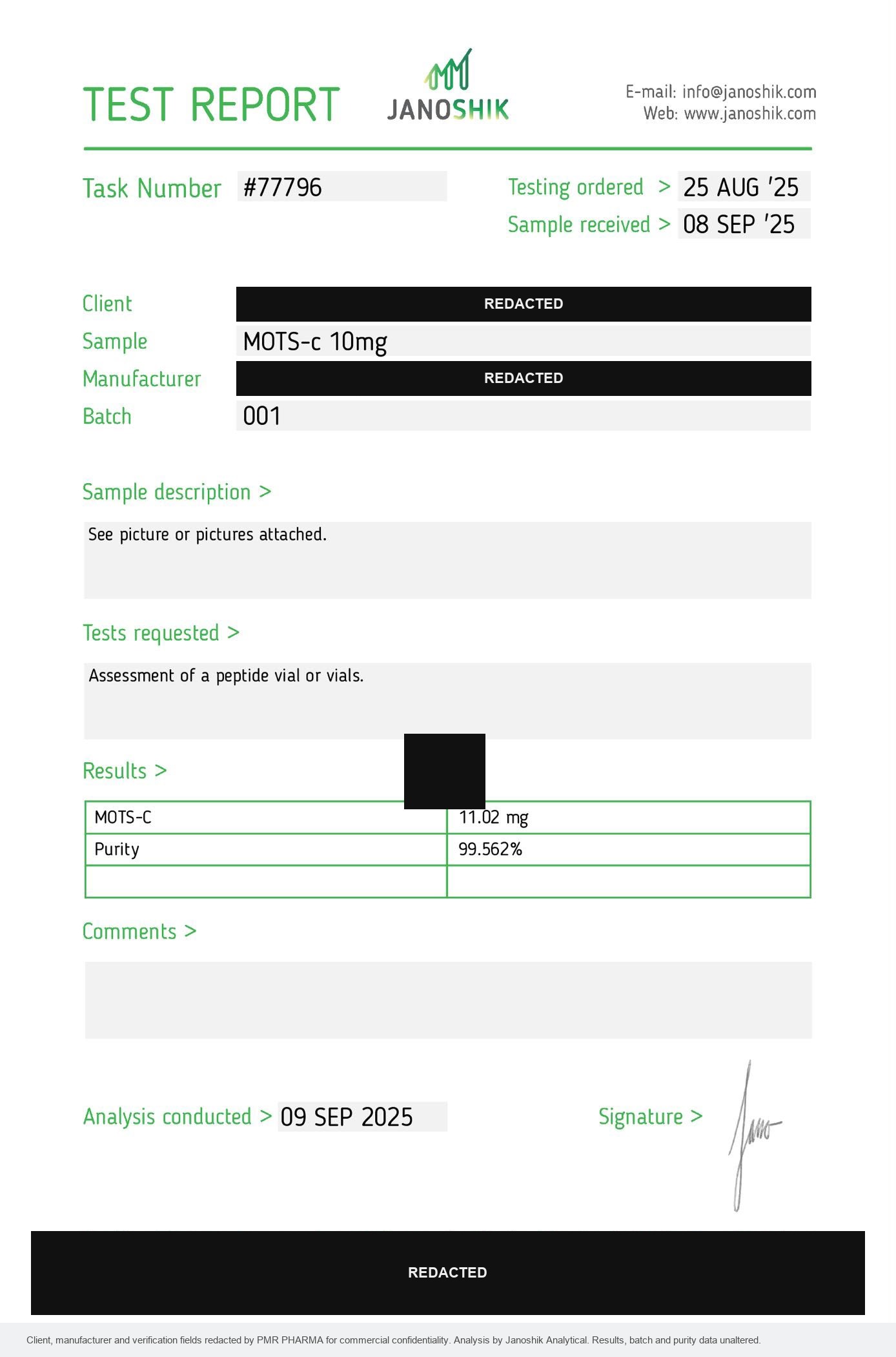
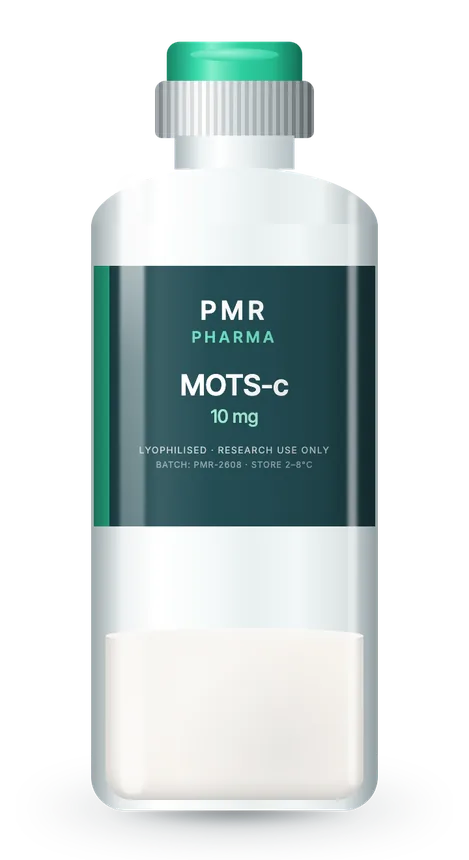
| Content | 10 mg — lyophilised vial |
| Purity | ≥99% (HPLC) — batch COA supplied |
| Form | Lyophilised powder |
| Storage | 2–8 °C lyophilised; reconstituted 2–8 °C |
Store lyophilised at 2–8 °C, or −20 °C for long-term. Reconstitute with bacteriostatic water; refrigerate after reconstitution and use within the research window on the COA.
Almost every peptide is encoded in the cell nucleus; MOTS-c is encoded in mitochondrial DNA. It is part of a newly recognised class of mitochondria-derived peptides.
In animal studies MOTS-c activates some of the same molecular pathways as exercise — AMPK signalling, glucose uptake, fat oxidation. The term comes from the research literature; human evidence is observational only.
No completed human dosing trials exist. Human data is limited to observational studies showing levels rise with exercise and correlate with muscle strength.
No — MOTS-c is on the WADA prohibited list as a metabolic modulator.
Message us on WhatsApp for availability, batch COAs and dispatch. A real person replies — usually within the hour.
Enquire via WhatsApp